1708 S Alexander St Plant City, FL 33563


Florida Summer Drinks That Are Secretly Destroying Your Teeth (And What to Do About It)


Let’s be honest — Florida summers are brutal. When it’s 95 degrees with 90% humidity and the sun feels like it has a personal vendetta against you, reaching for a cold drink isn’t just refreshing; it feels like survival. Sweet tea, lemonade, energy drinks, flavoured sparkling water, those giant gas station slushies — we’re not judging. We’ve been there.
But here’s the thing nobody really talks about: some of Florida’s most beloved warm-weather drinks are doing serious damage to your teeth, often without any obvious warning signs until the problem is already significant. And the more you sip throughout the day — which, again, is totally understandable when it’s this hot — the worse it gets.
So let’s break it all down, drink by drink, and talk about what you can actually do about it.
The Summer Drink Lineup: What’s Really Going On
Sweet Tea — Florida’s Unofficial State Drink
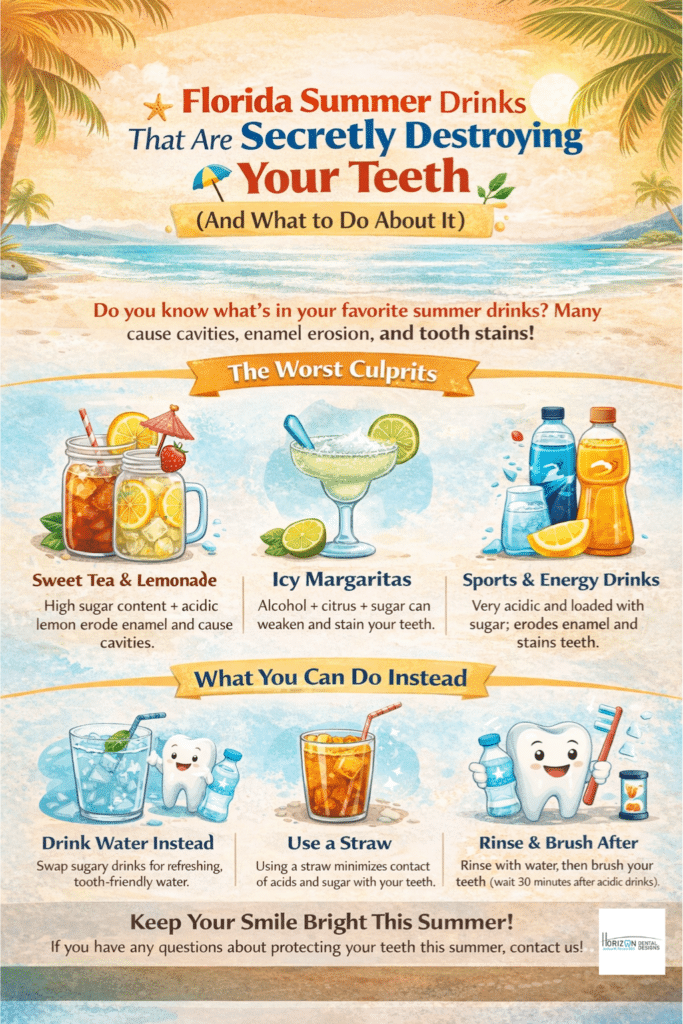
Sweet tea is practically a love language down here, and we would never ask you to give it up entirely. But a large sweet tea can pack anywhere from 30 to 60 grams of sugar depending on where you get it. Sugar is the fuel bacteria in your mouth need to produce acid — and that acid is what erodes enamel and causes cavities.
The problem isn’t just the sugar, though. Tea is also naturally acidic and deeply pigmented, which means it’s working on two fronts: weakening enamel and staining teeth at the same time. If you’re sipping on sweet tea throughout the afternoon instead of finishing it in one sitting, your teeth are basically marinating in acid and sugar for hours.
Lemonade and Citrus Drinks
Fresh-squeezed lemonade at the Strawberry Festival? Absolutely delicious. Also, extremely acidic. Citric acid is one of the most aggressive acids when it comes to tooth enamel erosion. Lemonade, orange juice, and any drink with citrus as a base all fall into this category.
What makes these drinks particularly tricky is that acidic erosion doesn’t cause immediate pain. You won’t feel your enamel thinning — you’ll just eventually notice increased sensitivity to hot and cold, or your teeth starting to look slightly translucent at the edges.
Sports Drinks and Energy Drinks
These get marketed as healthy or performance-enhancing, so people are often surprised to learn that many sports drinks are more acidic than orange juice. Energy drinks are even worse. Gatorade, Powerade, Monster, Red Bull — the combination of sugar (or artificial sweeteners), citric acid, and other additives creates a cocktail that’s genuinely harsh on enamel.
Athletes and active people are especially vulnerable here because they tend to sip these drinks slowly over long periods of time. The longer the exposure, the more damage accumulates.
Sparkling Water — Yes, Really
This one tends to shock people. Sparkling water feels like the virtuous choice — it’s not sweet, it’s not artificially coloured, it’s basically just water, right? Well, almost. The carbonation process creates carbonic acid, which does lower the pH of the drink enough to have a mild erosive effect on enamel. It’s significantly less damaging than soda or lemonade, but if you’re going through several cans or bottles a day, it adds up — especially if plain water is getting replaced rather than supplemented.
Slushies and Frozen Drinks
Slushies, frozen lemonades, blended frozen cocktails – these are the summer triple threat. They’re cold, they look fun, and they’re usually loaded with sugar, artificial coloring, and acid. The cold temperature can also cause existing sensitive areas to ache, and the high sugar content means bacteria get a feast every time you have one.
So What Can You Actually Do?
Drink Smart, Not Less
The goal isn’t to live a joyless summer surviving only on tap water. It’s about changing the way you drink, not necessarily what you drink (within reason).
Finish acidic or sugary drinks in one sitting rather than sipping slowly over hours. The less time your teeth spend exposed to acid and sugar, the better. Think of it like this: one glass of lemonade with lunch is far less damaging than the same amount sipped gradually over three hours.
Chase It with Water
After any acidic or sugary drink, rinse your mouth with plain water. It’s simple, it’s free, and it genuinely helps neutralise acid and wash away sugar before bacteria can get to work. This is one of the easiest habits you can build.
Wait Before You Brush
This one feels counterintuitive, but don’t brush immediately after drinking something acidic. When enamel is softened by acid, brushing can actually accelerate erosion. Wait at least 30 minutes after an acidic drink before reaching for your toothbrush. Rinsing with water right away is fine — in fact, encouraged.
Use a Straw
Drinking through a straw, especially a reusable one, directs liquid past the front surfaces of your teeth and reduces contact time. It’s not a magic solution, but it does meaningfully reduce exposure, particularly for drinks you can’t entirely give up.
Stay on Top of Your Dental Visits
This is genuinely important and not just something we’re saying because we’re a dental practice. Early-stage enamel erosion and cavity formation are often invisible to patients. A professional cleaning and exam every six months means problems get caught — and fixed — before they become expensive and painful. If you’re a patient of our Plant City dentist at Horizon Dental Designs, we’ll flag any early signs of erosion and give you personalised advice based on what we’re actually seeing.
Choose Your Battles
Some swaps are painless. Unsweetened iced tea instead of sweet tea cuts the sugar dramatically while keeping the ritual. Sparkling water instead of soda is a genuine upgrade. And plain water with a squeeze of lemon gives you the refreshing citrus hit without the sustained acid exposure of a full glass of lemonade.
You Don’t Have to Choose Between Enjoying Summer and Protecting Your Smile
Florida summers are something else — and the drinks that come with them are part of the culture. Nobody here is going to tell you to skip the lemonade stand or turn down sweet tea at a family barbecue. What we will tell you is that a few small shifts in how and when you consume these drinks can make a significant difference in the long-term health of your teeth.
And when in doubt, just visit us. We’re here to keep Plant City smiling, one checkup at a time.
FAQs
1. Is diet soda safer for my teeth than regular soda?
Not as much as most people think. Diet sodas eliminate sugar, which does reduce the risk of cavities, but they’re still highly acidic — sometimes more so than regular soda. Enamel erosion can still occur with regular diet soda consumption.
2. How do I know if my enamel is already eroding?
Common signs include increased tooth sensitivity (especially to hot, cold, or sweet foods), teeth that look slightly yellow or translucent at the edges, and a generally “worn” appearance. The best way to know for sure is a dental exam — enamel erosion is much easier to manage when caught early.
3. Is sparkling water okay to drink every day?
In moderation, yes — it’s far less damaging than soda, juice, or sweet tea. If you’re drinking multiple litres a day, alternating with still water is a smart habit. Flavoured sparkling waters that contain citric acid (check the label) are more acidic than plain sparkling water.
Can eroded enamel grow back?
Unfortunately, no. Unlike bone, enamel doesn’t regenerate. However, fluoride treatments and remineralising toothpastes can help strengthen weakened enamel and slow further erosion. Your dentist can recommend the right products for your situation.
How often should I come in for checkups if I drink a lot of acidic beverages?
Twice a year is the standard recommendation, but if you’re a frequent consumer of acidic drinks, sports drinks, or sodas, your dentist may suggest more frequent visits to monitor enamel health. It’s worth having that conversation at your next appointment.