1708 S Alexander St Plant City, FL 33563


Invisalign in Plant City, FL

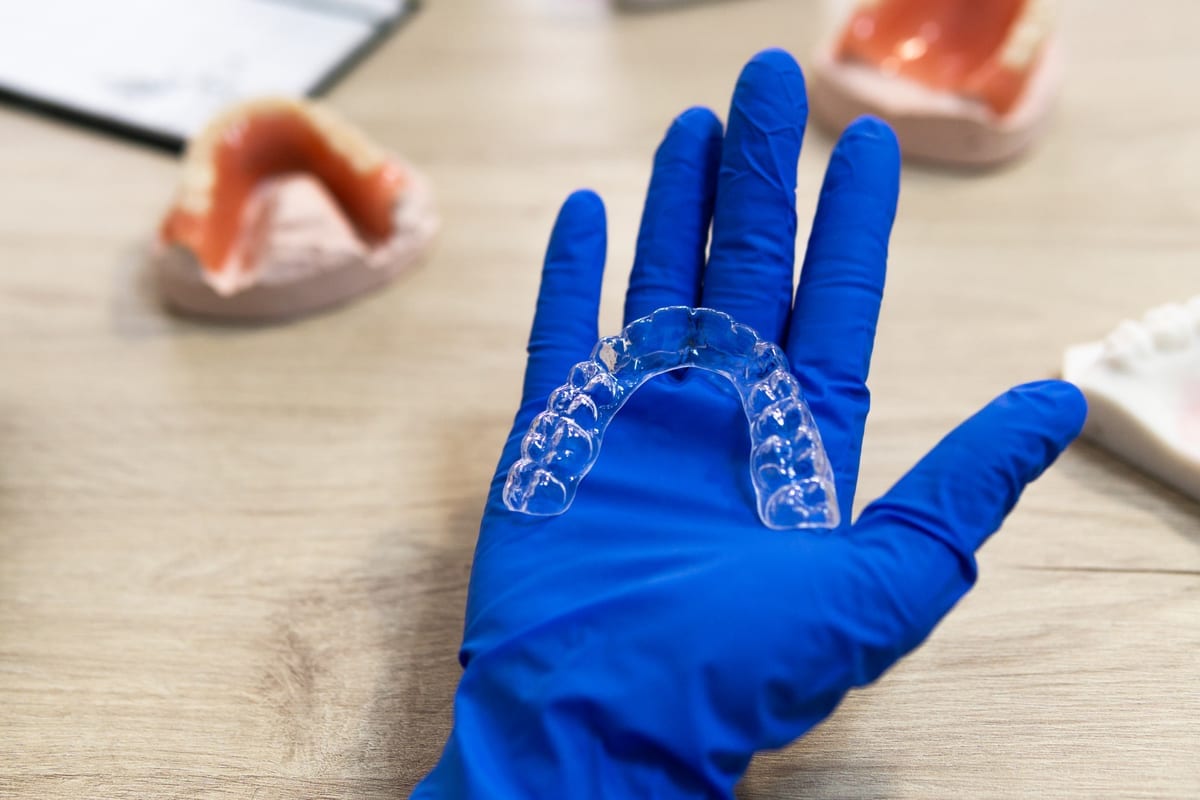
Have you ever wondered what is actually happening inside your mouth when you switch to a new Invisalign tray? Your Invisalign aligners actually move teeth through a precise, science-backed process — and understanding it makes the whole journey easier. At Horizon Dental Designs in Plant City, FL, Dr. Joshua Ferraro helps patients understand every step of their smile transformation. When you know the science behind each change, you become a more confident and consistent treatment partner.
How Invisalign Aligners Apply Force to Move Your Teeth
Teeth move because of a biological process called bone remodeling. When a steady, gentle pressure is applied to a tooth, the surrounding bone breaks down on one side and rebuilds on the other. Invisalign aligners are engineered to deliver exactly that kind of controlled pressure. Each tray is slightly different from the one before it, nudging teeth toward their target position.
The aligners are made from SmartTrack material, a multi-layer thermoplastic designed by Align Technology. This material creates a snug, consistent fit against your teeth. That consistent contact is what generates the precise forces needed for movement. Without a proper fit, those forces simply cannot do their job.
Each aligner is designed to move teeth by about 0.25 to 0.33 millimeters per step. That may sound tiny, but those small increments add up significantly over time. Consistent wear of 20 to 22 hours per day ensures the pressure is maintained long enough to trigger real bone remodeling.
The Aligner Change Schedule: Why Timing Matters in Plant City
Most Invisalign patients in Plant City follow a one-to-two-week aligner change schedule. This timing is not arbitrary — it is based on how long bone remodeling takes to respond to pressure. Switching too early means the bone has not finished adapting. Switching too late can slow your overall progress.
Dr. Ferraro customizes each patient’s change schedule based on their specific treatment plan. Some patients with complex cases may wear each tray for two weeks. Others with simpler corrections may advance every seven days. Following the schedule your provider sets is one of the most important things you can do for your results.
Here is what happens during a typical aligner change cycle:
- Days 1–2: The new tray feels tight as it begins applying pressure to target teeth.
- Days 3–5: Mild soreness may occur as bone remodeling starts responding.
- Days 6–10: The tray begins to fit more comfortably as teeth shift into position.
- Final days: The tray fits loosely, signaling that teeth have reached the intended position for that step.
That final looseness is actually a good sign. It means the aligner has done its job and your teeth are ready for the next tray.
What Are Invisalign Attachments and Why Do Some Patients Need Them?
Not every tooth movement can be achieved with aligner pressure alone. Some movements — like rotating a tooth or pulling one down into alignment — require additional grip. That is where Invisalign attachments come in. Attachments are small, tooth-colored bumps bonded directly onto specific teeth.
These tiny anchors give the aligner edges something to push or pull against. Think of them as handles that allow the aligner to apply force in directions it otherwise could not. They are barely visible and are removed completely at the end of treatment. Most patients forget they are even there after the first few days.
Common reasons Dr. Ferraro may recommend attachments include:
- Rotating teeth that are twisted out of alignment
- Extruding teeth that sit too high in the gumline
- Moving back teeth that require stronger anchoring force
- Correcting significant overbites or underbites alongside other appliances
Attachments are a normal and effective part of many Invisalign treatment plans. Their presence simply means your case involves movements that need a little extra mechanical help.
Understanding Refinements: When Your Treatment Needs Fine-Tuning
Refinements are additional sets of aligners prescribed after your initial series is complete. They are not a sign that something went wrong. In fact, refinements are a standard and expected part of many Invisalign journeys. Teeth do not always move in perfect, predictable ways — biology has its own timeline.
At your progress appointments, Dr. Ferraro compares your actual tooth positions against the digital treatment plan. If some teeth have not fully reached their goal, refinements close that gap. New digital scans are taken, and Align Technology fabricates a fresh set of trays to complete the job. Most refinement series involve far fewer trays than the original treatment.
Refinements are also used when a patient wants to make small cosmetic tweaks after the main corrections are done. Maybe one tooth is just slightly off, or spacing is almost perfect but not quite. Refinements give Dr. Ferraro the precision to fine-tune your final result before you move on to retainers.
What Happens After Every Aligner: Retainers Protect Your Investment
Once your final aligner is in and your smile looks exactly as planned, your bone is still in a state of stabilization. The teeth have moved, but the surrounding tissues need time to firm up. Skipping retainers at this stage is one of the most common reasons teeth drift back. Retainers hold everything in place while the bone fully hardens around the new positions.
Dr. Ferraro typically recommends full-time retainer wear for the first several months after treatment. After that, most patients transition to nighttime-only wear. Retainer compliance at this stage is just as important as aligner compliance during treatment. Your smile is worth protecting.
Ready to understand your own smile transformation from the inside out? At Horizon Dental Designs, Dr. Ferraro walks every Plant City patient through exactly how their treatment plan works — step by step, tray by tray. Book Now to schedule your appointment with our team.
Frequently Asked Questions
How do Invisalign aligners actually move teeth?
Invisalign aligners apply gentle, consistent pressure to specific teeth. This pressure triggers a biological process called bone remodeling, where bone breaks down on one side of the tooth root and rebuilds on the other. Each aligner is slightly different from the last, moving teeth in small, precise increments toward their final position.
Why do my aligners feel tight when I first put them in?
That tightness is a sign the aligner is working. It means the tray is applying pressure to your teeth in new positions they have not yet reached. The sensation typically fades within a day or two as your teeth begin to respond to the force and shift slightly into the new tray.
What are Invisalign attachments and will I need them?
Attachments are small, tooth-colored composite bumps bonded to specific teeth. They give your aligners extra grip to perform more complex movements, like rotating or extruding teeth. Not every patient needs them, but they are a common and effective tool for more involved tooth movements. Dr. Ferraro will let you know during your treatment planning if attachments are part of your plan.
How long does each aligner tray need to be worn?
Most aligner trays are worn for one to two weeks, depending on your specific treatment plan. The key is wearing them 20 to 22 hours per day so continuous pressure is maintained. Wearing them less than the recommended time can slow your progress and potentially require additional trays.
What are refinements in Invisalign treatment?
Refinements are additional aligner trays made after your initial series is finished. They are used when some teeth need further adjustment to fully reach their target positions. Refinements are a normal part of many Invisalign journeys and do not mean your treatment failed — they simply fine-tune your final result for the best possible outcome.