1708 S Alexander St Plant City, FL 33563


Broken Tooth? Here’s What Plant City Patients Should Do First

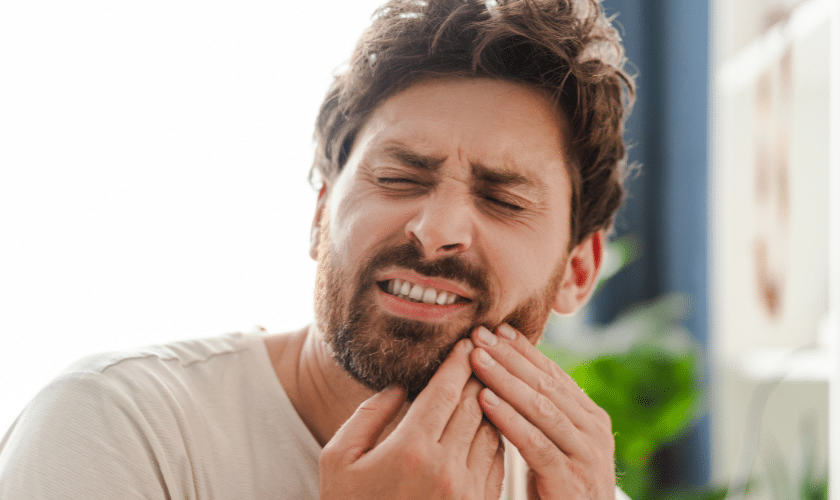
Breaking a tooth can happen when you least expect it.
Some people crack a tooth while eating dinner. Others experience dental injuries during sports, accidents, or even while chewing something unexpectedly hard. No matter how it happens, a broken tooth can quickly become stressful, painful, and confusing.
Many patients immediately wonder:
- Is this a dental emergency?
- Should I go to the dentist right away?
- Can the tooth be saved?
- What should I do first?
At Horizon Dental Designs, Dr. Joshua Ferraro helps patients throughout Plant City, Lakeland, Brandon, Valrico, and nearby communities handle dental emergencies quickly and comfortably.
Knowing what to do after breaking a tooth can help reduce pain, protect the tooth, and improve the chances of successful treatment.
Why a Broken Tooth Should Never Be Ignored
Some patients assume that if a broken tooth does not hurt immediately, it is not serious.
Unfortunately, even small cracks or chips can expose sensitive inner layers of the tooth to:
- Bacteria
- Infection
- Additional damage
A broken tooth may worsen over time if left untreated.
What starts as a minor fracture can eventually lead to:
- Severe tooth pain
- Infection
- Nerve damage
- Tooth loss
Seeking care early is often the best way to prevent more extensive dental treatment later.
Common Causes of Broken Teeth
Teeth are strong, but they are not indestructible.
Broken teeth commonly occur because of:
- Biting hard foods or ice
- Sports injuries
- Falls or accidents
- Teeth grinding
- Large old fillings weakening the tooth
- Untreated tooth decay
In some cases, teeth become more fragile over time due to wear and previous dental work.
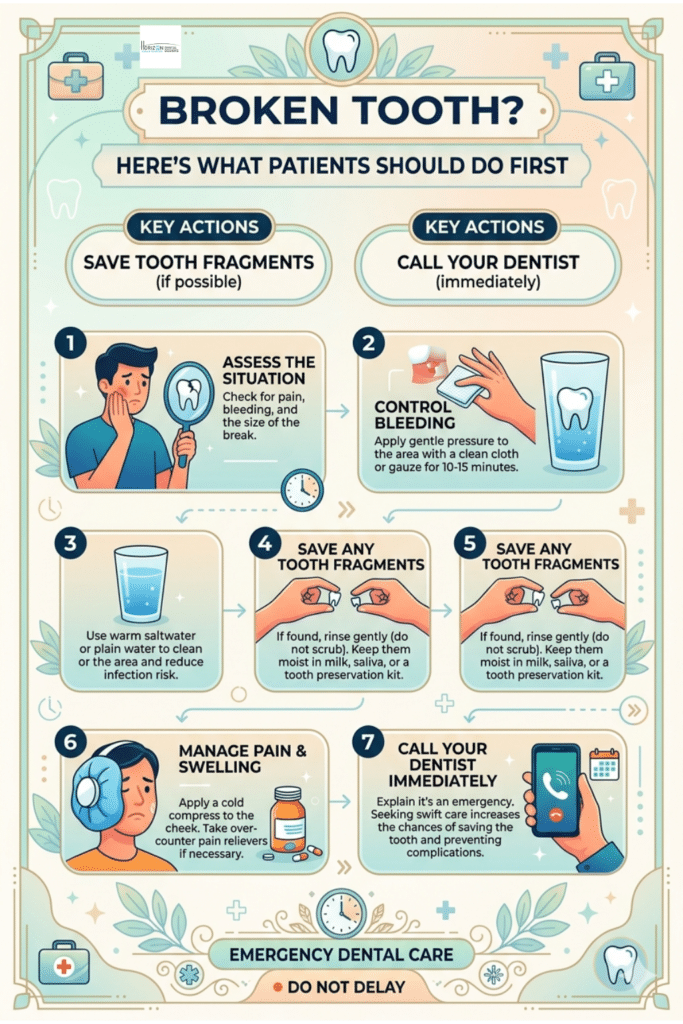
What To Do Immediately After Breaking a Tooth
The first few steps after a dental injury can make a big difference.
Rinse Your Mouth Gently
Use warm water to clean the area and remove debris.
This helps reduce irritation and lowers the risk of infection.
Save Any Broken Pieces if Possible
If part of the tooth broke off, try to save the fragment and bring it to the dental office.
In some situations, the piece may be usable during treatment.
Reduce Swelling With a Cold Compress
If swelling develops, apply a cold compress to the outside of the face for short intervals.
This may help reduce discomfort and inflammation.
Avoid Chewing on the Injured Side
Try not to place pressure on the damaged tooth until it has been evaluated by a dentist.
Chewing may worsen the fracture or increase pain.
Contact a Dentist as Soon as Possible
A broken tooth should always be professionally evaluated, even if symptoms seem minor.
Patients searching for an emergency dentist in Plant City often wait longer than they should because they hope the discomfort will improve on its own.
Unfortunately, delays often allow the damage to worsen.
Signs a Broken Tooth May Be a Dental Emergency
Some broken teeth require urgent treatment.
Warning signs include:
- Severe pain
- Bleeding
- Swelling
- Sharp edges cutting the tongue or cheek
- Difficulty chewing
- Sensitivity to hot or cold
- A loose tooth
- Signs of infection
If these symptoms occur, seeking immediate dental care is important.
Different Types of Broken Teeth
Not every dental fracture looks the same.
Minor Chips
Small chips may affect only the outer enamel and sometimes cause little discomfort.
These are often repairable with cosmetic bonding or smoothing.
Moderate Cracks
Cracks that extend deeper into the tooth may cause:
- Sensitivity
- Pain while chewing
- Structural weakness
Treatment may involve crowns or restorative procedures.
Severe Fractures
Large fractures can expose the inner pulp of the tooth, increasing the risk of infection and significant pain.
More advanced treatment, such as root canal therapy or extraction, may sometimes be necessary.
Why Fast Treatment Matters
Many patients delay treatment because they are busy, nervous, or hoping the tooth will heal on its own.
Unfortunately, teeth cannot regenerate like other parts of the body.
Delaying care may allow:
- Cracks to spread
- Infection to develop
- Additional tooth structure to break away
Early treatment often improves the chances of saving the natural tooth.
How Dentists Repair Broken Teeth
Treatment depends on the severity and location of the damage.
Dental Bonding
Minor chips may be repaired using tooth-coloured composite material.
Bonding helps restore appearance and function.
Dental Crowns
Crowns are commonly used when a tooth has lost significant structure.
A crown helps:
- Protect the tooth
- Restore strength
- Improve appearance
Root Canal Therapy
If the fracture reaches the inner pulp, root canal therapy may be necessary to remove infection and save the tooth.
Tooth Extraction
In severe cases where the tooth cannot be restored, extraction may be recommended.
Your dentist will discuss all available options before treatment.
Can a Broken Tooth Heal on Its Own?
Unlike bones, teeth do not naturally heal once cracked or fractured.
Even if pain temporarily improves, the underlying damage remains.
Without treatment, the tooth may continue weakening over time.
That is why professional evaluation is important after any dental injury.
Preventing Broken Teeth in the Future
While some accidents are unavoidable, there are ways to reduce the risk of future dental fractures.
Avoid Chewing Hard Objects
Ice, popcorn kernels, hard candy, and non-food objects can place excessive pressure on teeth.
Wear a Mouthguard During Sports
Protective mouthguards help reduce dental injuries during athletic activities.
Treat Teeth Grinding Early
Chronic grinding can weaken teeth over time.
Nightguards may help protect the teeth from excessive wear.
Keep Up With Preventive Dental Care
Routine exams help identify weakened teeth before fractures occur.
Preventive care often reduces the risk of dental emergencies later.
Why Patients in Plant City Choose Horizon Dental Designs
Patients throughout Plant City and surrounding communities trust Horizon Dental Designs because of its:
- Modern dental technology
- Comfortable patient-focused care
- Emergency dental experience
- Personalized treatment approach
Dr. Joshua Ferraro works closely with patients to evaluate dental injuries quickly and recommend the most appropriate treatment options.
Final Thoughts
Breaking a tooth can feel overwhelming, but knowing what to do first can help protect your oral health and reduce the risk of complications. Visit us as early as possible.
Even small cracks or chips should not be ignored because dental damage can worsen over time.
For patients throughout Plant City, Lakeland, Brandon, and nearby communities, prompt dental care after a broken tooth can often improve comfort, protect the natural tooth, and prevent more serious problems later.
When it comes to broken teeth, early treatment is almost always the best decision.
FAQs
1. Is a broken tooth always a dental emergency?
Not every broken tooth is severe, but all fractures should be evaluated by a dentist as soon as possible.
2. What should I do immediately after breaking a tooth?
Rinse your mouth gently, avoid chewing on the tooth, apply a cold compress if needed, and contact a dentist promptly.
3. Can a chipped tooth get worse over time?
Yes. Even small chips may weaken the tooth and increase the risk of further damage or infection.
4. Can a broken tooth be saved?
Many broken teeth can be repaired depending on the severity of the fracture and how quickly treatment occurs.
5. How are broken teeth treated?
Treatment may include bonding, crowns, root canal therapy, or extraction, depending on the extent of damage.