1708 S Alexander St Plant City, FL 33563


What Your Dentist Can See on a Dental X-Ray That You Can’t

Many patients wonder why dental X-rays are necessary, especially when their teeth feel perfectly fine.
If there’s no visible cavity, swelling, or pain, it can seem like X-rays are just another routine step during a dental visit. But the truth is that many oral health problems begin beneath the surface—long before symptoms become noticeable.
At Horizon Dental Designs, Dr. Joshua Ferraro uses modern digital imaging to help identify hidden dental concerns early for patients throughout Plant City, Lakeland, Brandon, Valrico, and nearby communities.
Dental X-rays allow dentists to see areas of the mouth that simply cannot be evaluated with a visual exam alone.
Preventive imaging often helps detect small issues before they become larger, more painful, and more expensive problems later.
Why Visual Dental Exams Aren’t Always Enough
Even during a thorough dental exam, there are limitations to what can be seen directly.
Dentists can evaluate:
- Tooth surfaces
- Gums
- Bite alignment
- Existing restorations
- Signs of visible wear or damage
However, many dental conditions develop:
- Between teeth
- Below the gumline
- Inside tooth roots
- Within the jawbone
This is where dental X-rays become essential.
They provide a more complete picture of your oral health and help dentists identify problems before they worsen.
What Are Dental X-Rays?
Dental X-rays are diagnostic images that help dentists examine hidden structures inside the mouth.
Modern digital X-rays use very low radiation levels while producing highly detailed images of:
- Teeth
- Tooth roots
- Bone structure
- Gum support
- Developing dental issues
Patients visiting a dentist Plant City are often surprised by how much valuable information these images reveal.
Dental X-rays are one of the most important tools in preventive dentistry.
Hidden Problems Dentists Can Detect on Dental X-Rays
Cavities Between Teeth
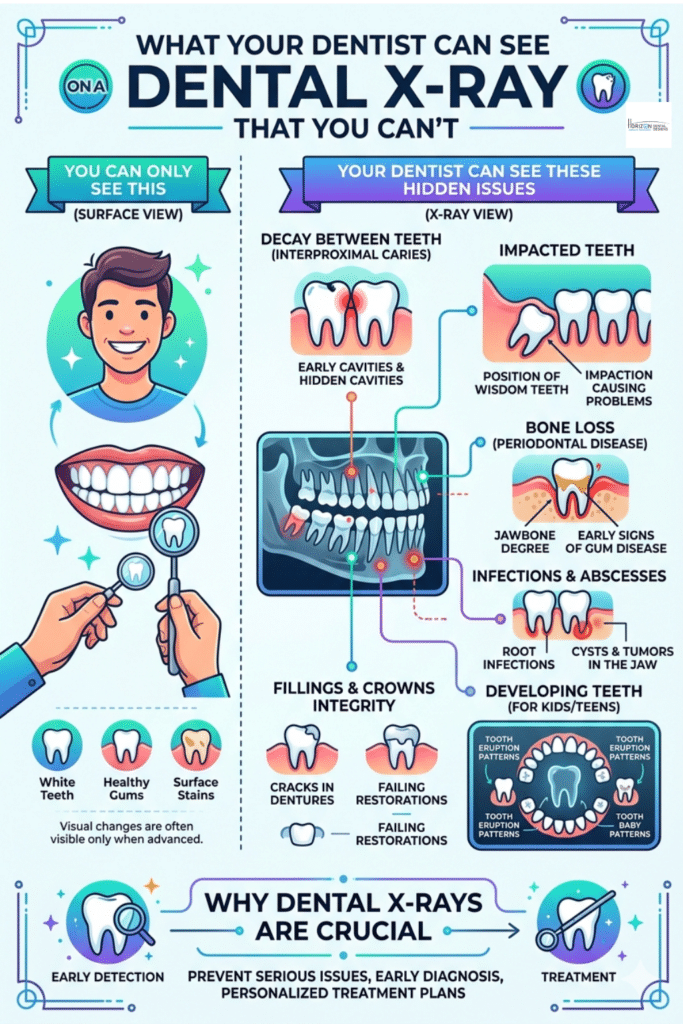
One of the most common things dentists identify on X-rays is decay hidden between teeth.
These cavities often cannot be seen during a standard exam because they form in tight spaces where visibility is limited.
Without X-rays, small cavities may continue growing unnoticed until they eventually cause:
- Tooth pain
- Sensitivity
- Larger structural damage
Detecting decay early usually means simpler treatment and less invasive procedures.
Infections Beneath the Tooth
Dental infections sometimes develop deep below the gumline without obvious symptoms at first.
X-rays can reveal:
- Abscesses
- Root infections
- Bone inflammation
- Damaged tooth roots
Many patients are surprised to discover an infection before experiencing severe pain.
Early detection helps prevent the infection from spreading or becoming more serious.
Bone Loss Caused by Gum Disease
Gum disease is one of the most common oral health issues adults face, and it often progresses quietly.
Even if the gums look relatively healthy on the surface, dental X-rays can reveal:
- Bone deterioration
- Gum disease progression
- Structural weakening around teeth
Bone loss is especially important to monitor because it may eventually lead to loose teeth or tooth loss.
Impacted Teeth
Dental X-rays also help identify impacted teeth that are trapped beneath the gums or growing improperly.
This commonly includes:
- Wisdom teeth
- Teeth blocked from erupting
- Teeth growing sideways
Impacted teeth can create:
- Pain
- Swelling
- Infection
- Crowding issues
Without imaging, these problems may remain hidden until symptoms become more severe.
Cracks and Hidden Tooth Damage
Not every dental crack is visible to the naked eye.
Some fractures occur:
- Inside the tooth structure
- Beneath fillings
- Near the tooth root
X-rays help dentists identify hidden damage that might otherwise go unnoticed until the tooth becomes painful or unstable.
Early Problems Before Symptoms Begin
One of the biggest benefits of dental X-rays is detecting issues before patients feel discomfort.
Many people assume:
“If nothing hurts, my teeth must be healthy.”
But dental pain is often a late-stage symptom.
By the time discomfort develops, the issue may already be more advanced.
X-rays allow dentists to catch:
- Small cavities
- Early infections
- Bone changes
- Developing abnormalities
before they become major problems.
Are Dental X-Rays Safe?
This is one of the most common concerns patients have.
Modern digital dental X-rays use significantly lower radiation levels than older technology and are considered very safe for routine preventive care.
At Horizon Dental Designs, patient safety remains a top priority during all diagnostic procedures.
Digital imaging technology helps provide accurate diagnostics while minimising radiation exposure.
How Often Should Dental X-Rays Be Taken?
The frequency of dental X-rays depends on several factors, including:
- Age
- Oral health history
- Existing dental concerns
- Risk for cavities or gum disease
Some patients may require imaging more frequently if they are actively treating dental conditions, while others may need it less often.
Dr. Joshua Ferraro evaluates each patient individually to determine the most appropriate imaging schedule.
Why Preventive Dental Care Matters in Plant City
Families throughout Plant City and surrounding communities like Lakeland, Brandon, Dover, and Valrico often balance busy schedules with work, school, and family responsibilities.
Because of this, preventive dental care is sometimes postponed when there are no obvious symptoms.
However, routine exams and dental X-rays help identify concerns before they become emergencies.
Preventive care often helps patients:
- Avoid major dental procedures
- Reduce long-term dental costs
- Maintain healthier smiles
- Detect issues earlier
Early treatment is almost always easier than waiting until pain develops.
How Dental X-Rays Improve Treatment Planning
Dental X-rays don’t just help identify problems—they also help dentists create more accurate and personalised treatment plans.
Imaging allows dentists to evaluate:
- Tooth positioning
- Root structure
- Bone support
- Existing restorations
- Areas of hidden damage
This improves precision and makes treatment recommendations more effective.
Why Patients Choose Horizon Dental Designs
Patients throughout Plant City trust Horizon Dental Designs because of its:
- Modern dental technology
- Preventive approach to care
- Comfortable patient experience
- Personalized treatment planning
Dr. Joshua Ferraro focuses on helping patients understand their oral health while identifying problems as early as possible.
Final Thoughts
Dental X-rays are one of the most valuable tools in modern dentistry because they help detect hidden problems long before symptoms appear.
From cavities and infections to bone loss and impacted teeth, many oral health issues develop beneath the surface where patients cannot see them on their own. Visit us for a comforting experience and a personalised treatment.
For patients throughout Plant City and nearby communities, routine dental X-rays play an important role in protecting long-term oral health and preventing larger dental problems later.
Sometimes the most important dental issues are the ones you can’t see yet.
FAQs
1. Why are dental X-rays important?
Dental X-rays help detect hidden problems such as cavities, infections, bone loss, and impacted teeth that may not be visible during a routine exam.
2. Are dental X-rays safe?
Yes. Modern digital dental X-rays use very low radiation levels and are considered safe for preventive dental care.
3. Can X-rays detect cavities between teeth?
Yes. Many cavities form in tight spaces that cannot be seen during a visual exam alone.
4. Do dental X-rays help diagnose gum disease?
Yes. X-rays help dentists evaluate bone levels and identify signs of periodontal disease.
5. How often should dental X-rays be taken?
The frequency depends on each patient’s oral health needs, dental history, and risk factors.