1708 S Alexander St Plant City, FL 33563


Dental Emergency or Can It Wait? How to Tell the Difference at Home


Dental emergencies, unfortunately, always catch us off guard. From a sudden toothache to a broken tooth to even a lost filling, it’s crucial to know whether your dental problem can wait or requires immediate attention. Your first step in managing the situation is to learn the signs and symptoms that differentiate a genuine dental emergency from an issue that can wait.
Most dental concerns can easily be addressed during a regular office appointment; however, certain situations necessitate emergency dental care. This blog will help you discern what conditions constitute a dental emergency, what you should do in each case until you can see a dentist, and avoid unnecessary panic while ensuring that pressing problems are addressed.
Can You Wait on It? Common Dental Problems That Can Wait
Not all dental problems require an immediate visit to the dentist. Some issues can simply wait until you are able to make an appointment. Here are some common dental issues that do not usually warrant a trip to the emergency dentist:
1. Sensitive Teeth
Sensitive teeth can result from eating extremely cold or hot foods, acidic foods, or brushing or flossing your teeth too hard. Although these issues may be painful, mild sensitivity generally can wait to be treated. If your teeth are still sensitive after prolonged exposure to hot, cold, or acidic foods for an extended amount of time, make an appointment with your dentist to have the problem diagnosed.
2. Minor Chipped Teeth
A chipped tooth that does not result in pain or sensitivity can often wait to be treated. It is a good idea to contact your dentist so the chipped area can be smoothed out, but if no sharp edge is being damaged, it is generally not an emergency.
3. Loose Braces or Retainers
A loose bracket or wire with the braces should not always necessitate a trip to the emergency dentist in Plant City. If the loose bracket is not causing pain or gum irritation, it can wait until the next appointment time with the orthodontist. If the loose piece is poking and irritating the mouth, however, it is recommended that you see an orthodontist immediately to relieve the discomfort.
4. Mild Gum Irritation
A little bit of redness or inflammation around the gums can be an indication of the early stages of gum disease. As long as there is no bleeding or pain associated with the inflammation, then the problem should respond to an increase in good hygiene and a cleaning by your dentist. If the gums are significantly red and irritated, with heavy bleeding and pain, this is a dental emergency.
5. Tooth Discoloration
Although tooth discoloration is primarily cosmetic, it can be concerning when it persists for an extended period. Tooth discoloration generally is not a dental emergency. Make an appointment with your dentist to discuss options for treating tooth discoloration.
What to Do While You Wait for Treatment
Even though some dental problems do not require an emergency appointment with the dentist, it is always good to alleviate discomfort in any way possible to prevent the situation from worsening.
For Tooth Pain
Over-the-counter pain relievers may ease the pain, and cold compresses may reduce swelling in the mouth. You can rinse your mouth with warm salt water in order to keep the area clean. Avoid cold or hot food/drink, sugary foods and drinks.
For A Knocked-Out Or Broken Tooth
If pieces of your tooth are not found, it is recommended that you rinse your mouth with warm salt water to relieve the pain. If you have found the pieces of the tooth, they may be rinsed and placed in a cup of milk to reinsert into the mouth. If your tooth has been knocked out completely, it is recommended that you reinsert it into the socket and hold your mouth against it to allow blood flow to the tooth, or place it in a cup of milk. Do not touch the root of the tooth, as the vitality of the tooth depends on keeping it attached to this.
For Swelling And Bleeding Of The Gums
For bleeding gums or swelling, use a warm saltwater rinse. The swelling may be reduced by applying a cold compress to the irritated area. Be careful to eat only foods that will not further irritate the gums, such as no crunchy or solid foods.
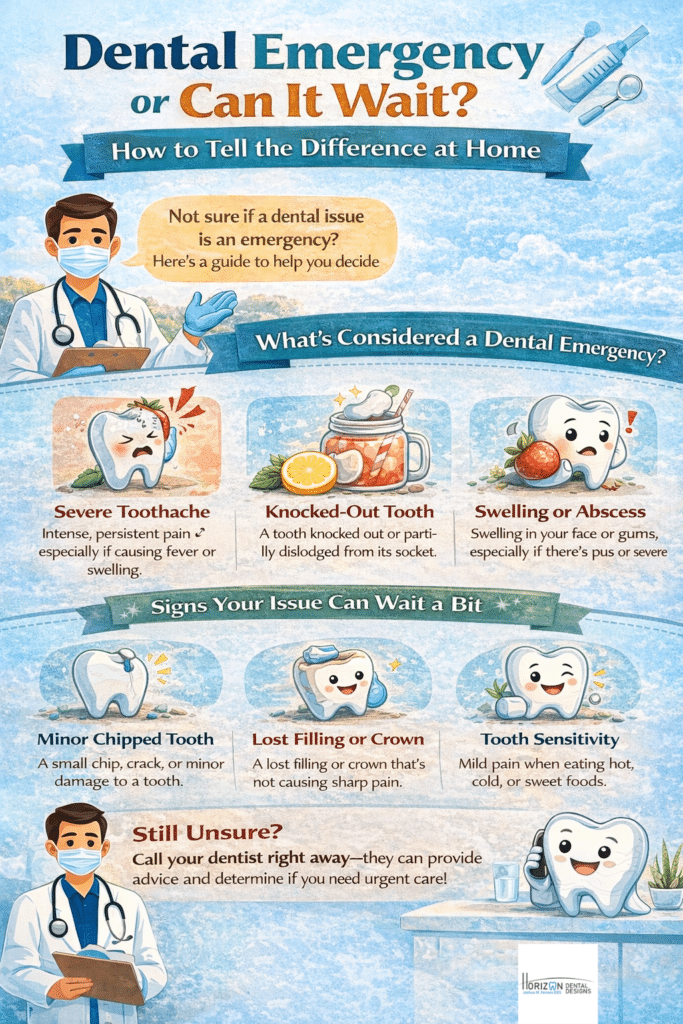
When to Seek Immediate Dental Care
Dental emergencies typically arise from the presence of pain, swelling, or damage, the symptoms of which may have an effect on your overall health. It is important to recognize the difference between minor issues that can wait and those that may require the immediate attention of a dentist near you. The most common reasons for immediate dental intervention are the following:
1. Severe Tooth Pain Or Sensitivity
A toothache that does not subside and steadily worsens can be an indicator of an infection, cavity, or abscess that calls for immediate intervention. If you have severe, throbbing pain around the gums, it could signal an abscess, an infection that may potentially spread to other areas of the body.
2. Cracked Or Broken Teeth
If you have cracked or broken a tooth, the degree of the break will tell you if a medical emergency exists. A minor crack or chip is unlikely to require emergency dental attention; however, a large break exposing the tooth’s nerve or excruciating pain may require it. These issues often call for an emergency dentist in Plant City to prevent worse problems.
3. Knocked-Out Teeth
When teeth are knocked out, it may be a medical emergency, and prompt action will save the tooth if it is replaced in its socket within 30-60 minutes. Make sure you avoid touching the root of the tooth, rinse the crown gently, and place it back into its socket. If that is not possible, keep the tooth in a small container of milk and proceed to the dentist quickly.
4. Gum Bleeding And Swelling
The bleeding and swelling of gums without a prior reason may be an indication of periodontal disease or infection. Swelling accompanying pain can indicate an abscess, so prompt care is essential.
5. Loose Dental Fillings Or Crowns
Although inconvenient, losing a filling or crown may not always be an emergency unless it is accompanied by pain or has exposed the tooth’s nerves. It is advisable to seek the aid of a dentist near you to have the restoration replaced quickly.
Don’t Wait Too Long: Seek Help When Needed
It’s never fun to have a dental emergency, but knowing when to get care and when to wait is a huge part of your overall dental health. If you are experiencing any signs of a dental emergency, don’t hesitate to call an emergency dentist near you. Whether it’s to find out whether your knocked-out tooth will make it or whether that crack in your tooth will ever be fixed, there is always a right time to have your mouth examined.
When it’s time for urgent dental assistance, Horizon Dental Designs can help. If you are facing a serious toothache or another dental issue, we can provide the dental care you need. Give us a call today to schedule an appointment and feel better in no time.
Questions People Ask About Dental Emergency
1. What should I do if I knock out a tooth?
If you knock out a tooth, rinse it gently without scrubbing and try to place it back in its socket. If that’s not possible, store it in milk and see a dentist immediately for the best chance of saving the tooth.
2. How do I know if my tooth pain is an emergency?
Severe or throbbing tooth pain that doesn’t go away can be a sign of infection or abscess, which requires urgent care. If the pain is consistent and sharp, it’s time to call your dentist.
3. Can I wait for dental treatment if my tooth is chipped?
If the chip is small and doesn’t cause pain, you can wait for a dental appointment. However, if the chip exposes nerves or creates a sharp edge, immediate care may be needed.
4. What can I do for a loose filling or crown?
If you lose a filling or crown, temporarily place a piece of sugar-free gum over the area and see your dentist as soon as possible. Don’t wait too long, as it could cause further tooth damage.
5. Is it normal for my gums to bleed when brushing?
Occasional gum bleeding when brushing may be due to brushing too hard. However, persistent bleeding or swelling may indicate gum disease, which should be evaluated by your dentist.
6. Should I visit an emergency dentist for mild tooth sensitivity?
Mild sensitivity usually doesn’t require emergency care. However, if it persists or worsens, make an appointment with your dentist to rule out any underlying issues.